
Some songs share the same tempo, similar energy levels, and even comparable structures—yet they feel completely different. One might feel euphoric and uplifting, while another feels dark, tense, or nostalgic. This is the mystery of musical “vibes,” where emotion is shaped by far more than just BPM.
Understanding why this happens reveals how deeply layered music really is. Beneath every track is a complex combination of harmony, rhythm, sound design, and performance choices that shape how we emotionally interpret what we hear.
Let’s break down the key elements that determine why two songs with similar BPM can feel like entirely different worlds.
Why BPM Alone Doesn’t Define Mood
Beats per minute only measure speed, not emotion.
Two songs at 120 BPM can feel radically different because BPM doesn’t account for:
- Harmonic structure
- Instrument choices
- Vocal tone
- Production style
- Dynamic range
In other words, BPM is the skeleton—but vibes come from everything built on top of it.
1. Chord Progressions: The Emotional Blueprint
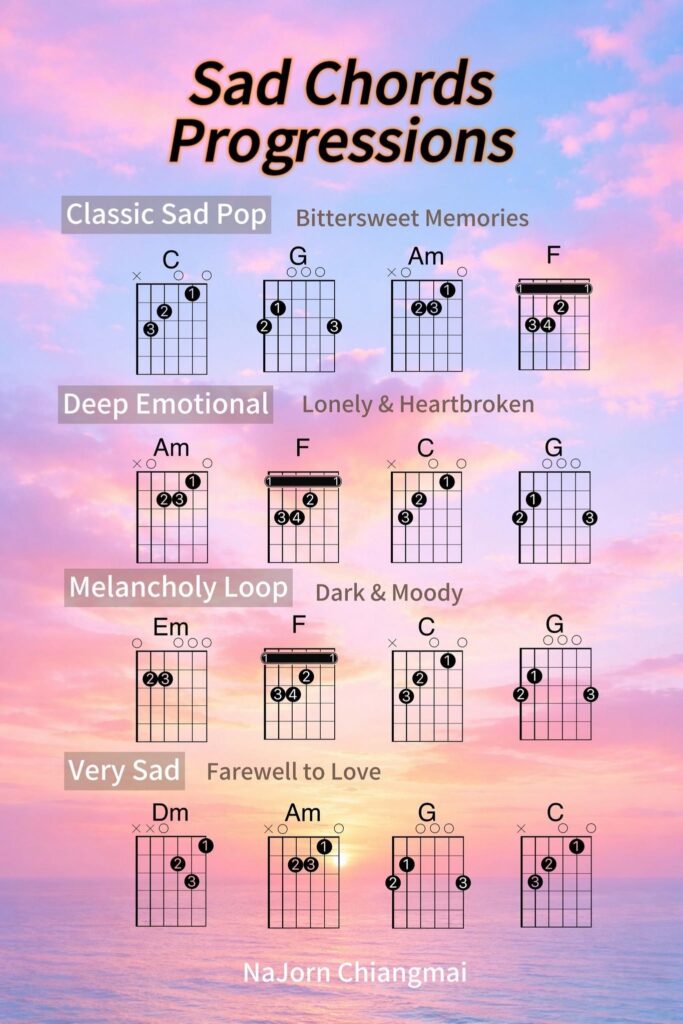
Chord progressions are one of the strongest drivers of mood in music. They determine whether a song feels happy, sad, tense, or unresolved—even at the same tempo.
Major vs Minor Tonality
- Major chords → bright, uplifting, optimistic
- Minor chords → emotional, moody, introspective
Even subtle shifts in harmony can completely change perception.
Example Contrast
Two songs at identical BPM:
- Song A uses a bright I–V–vi–IV progression → feels hopeful and expansive
- Song B uses a vi–IV–i–V progression → feels melancholic or cinematic
Same speed, different emotional universe.
Why It Works
Your brain interprets harmonic movement as emotional storytelling. Chords signal tension, release, and resolution before lyrics even matter.
2. Instrumentation: The Color of Sound
If chord progressions are the blueprint, instrumentation is the paint.
The same melody can feel completely different depending on what plays it.
Instrument Examples and Their Typical Vibes
- Acoustic guitar → warm, intimate, organic
- Synth pads → dreamy, atmospheric, futuristic
- Distorted electric guitar → aggressive, energetic, rebellious
- Piano → emotional, reflective, cinematic
- 808 bass → heavy, modern, grounded
Example Difference
At the same BPM:
- A track driven by soft piano and strings feels emotional and slow-burning
- A track driven by distorted synths and punchy drums feels intense and fast-paced
Instrumentation defines the “texture” of emotion.
3. Rhythm: The Feeling of Movement
Rhythm determines how your body responds to music. Even if two songs share BPM, their rhythmic structure can make them feel completely different.
Straight vs Syncopated Rhythm
- Straight rhythm → predictable, steady, driving
- Syncopation → off-beat, playful, unpredictable
Groove Matters
A song with a laid-back groove can feel slower than it actually is, while a tightly packed rhythm can feel faster than its BPM suggests.
Example Contrast
- A clean four-on-the-floor beat feels stable and energetic
- A syncopated rhythm with off-beat accents feels loose and dynamic
Your brain reacts to rhythm physically, not mathematically.
4. Vocals: The Emotional Lead
Vocals are often the most emotionally direct element in a song. Even identical instrumentals can feel different depending on vocal performance.
Key Vocal Factors
- Tone (breathy, powerful, strained, smooth)
- Delivery style (spoken, sung, rapped, layered)
- Emotion (joyful, detached, melancholic, aggressive)
- Processing (autotune, reverb, distortion)
Example Difference
At the same BPM:
- Soft, whispered vocals → intimacy and vulnerability
- Loud, soaring vocals → power and emotional release
- Detached or robotic vocals → distance or unease
Vocals act as the emotional “face” of a song.
5. Mixing: The Invisible Emotion Layer
Mixing determines how all elements sit together in the soundscape. It’s one of the most overlooked but powerful influences on vibe.
Key Mixing Elements
- Reverb → space and atmosphere
- Stereo width → openness vs claustrophobia
- Bass emphasis → weight and physical impact
- Treble clarity → brightness and detail
Example Contrast
Two songs at the same BPM:
- Dry, close-mic mix → feels intimate and immediate
- Wide, reverb-heavy mix → feels distant and cinematic
Mixing shapes emotional “distance,” even before you consciously notice it.
6. Dynamics: The Emotional Shape of a Song
Dynamics refer to how loud or soft a song is over time. This creates emotional movement beyond rhythm or melody.
Types of Dynamic Behavior
- Flat dynamics → consistent energy, hypnotic feel
- Gradual builds → emotional progression
- Sudden drops or peaks → shock and excitement
Example Contrast
- A steady, compressed track feels controlled and repetitive
- A song that slowly builds feels like a journey
Dynamics determine whether a song feels static or alive.
How All These Elements Combine
The real magic of musical “vibes” comes from how all these components interact.
At the same BPM, you can have:
Song A
- Major chords
- Bright synths
- Steady rhythm
- Clean vocals
- Dry mix
- Flat dynamics
→ Feels upbeat, confident, and energetic
Song B
- Minor chords
- Atmospheric pads
- Syncopated rhythm
- Emotional vocals
- Reverb-heavy mix
- Gradual build
→ Feels emotional, cinematic, and introspective
Same tempo. Completely different world.
Why Humans Feel Music Instead of Calculating It
Your brain doesn’t process music like a metronome. Instead, it interprets layers of emotional cues at once.
You respond to:
- Pattern recognition (rhythm)
- Emotional association (chords)
- Vocal expression (human signal)
- Spatial perception (mixing)
- Physical response (bass and dynamics)
This is why “vibes” feel intuitive. Your brain is doing real-time emotional decoding faster than conscious thought.
Practical Takeaways for Better Listening
Understanding musical vibes can change how you build playlists or choose music for different moods.
For Energy
- Major chords
- Bright instrumentation
- Tight rhythm
- Forward-driving mix
For Focus
- Stable dynamics
- Minimal vocals
- Smooth mixing
- Repetitive rhythmic patterns
For Emotion
- Minor progressions
- Wide reverb
- Slow builds
- Expressive vocals
For Atmosphere
- Ambient textures
- Soft dynamics
- Spatial mixing
- Minimal rhythmic complexity
Final Thoughts
BPM might set the pace, but it doesn’t define the experience. The true emotional identity of a song comes from the subtle interaction between harmony, rhythm, instrumentation, vocals, mixing, and dynamics. These elements work together to create what we casually call “vibes”—a feeling that is far more complex than tempo alone can explain.
That’s why two songs with identical BPM can live in completely different emotional universes. One might energize you, another might calm you, and another might pull you into reflection. The science behind that difference isn’t mysterious—it’s layered, intentional, and deeply human.